New pinball: Tron: Legacy (Pro)
A 2011 Stern Tron: Legacy (Pro), my first brand-new-in-box machine, acquired February 2013.
This was my first brand-new-in-box pinball machine, and at the time that was a big deal to me.
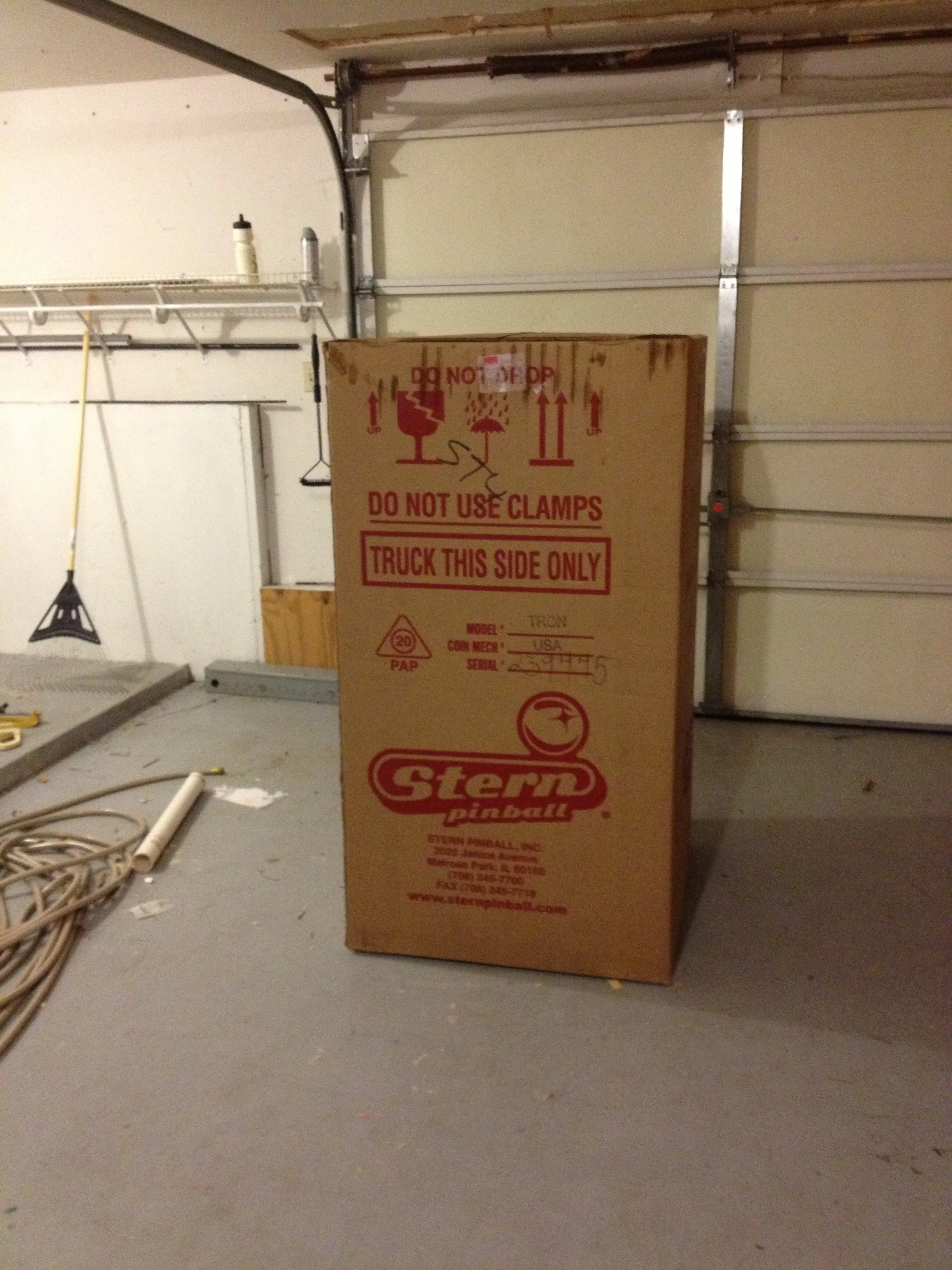
The road to it started in tech school. Tech school was a half-day program that high schoolers could attend to earn a technical certification alongside regular high school. I did both years of the Computer Programming track, junior and senior year, and I will write that one up properly someday. A friend from my first year there, Mandy, talked me into going to see Tron: Legacy, the reboot. I fell hard for it, especially the Daft Punk soundtrack and the whole neon aesthetic of the movie. She is also the friend who first got me into Tron in the first place, which I wrote a little about here. So when I heard Stern was making a Tron: Legacy pinball machine, it was a complete no-brainer.
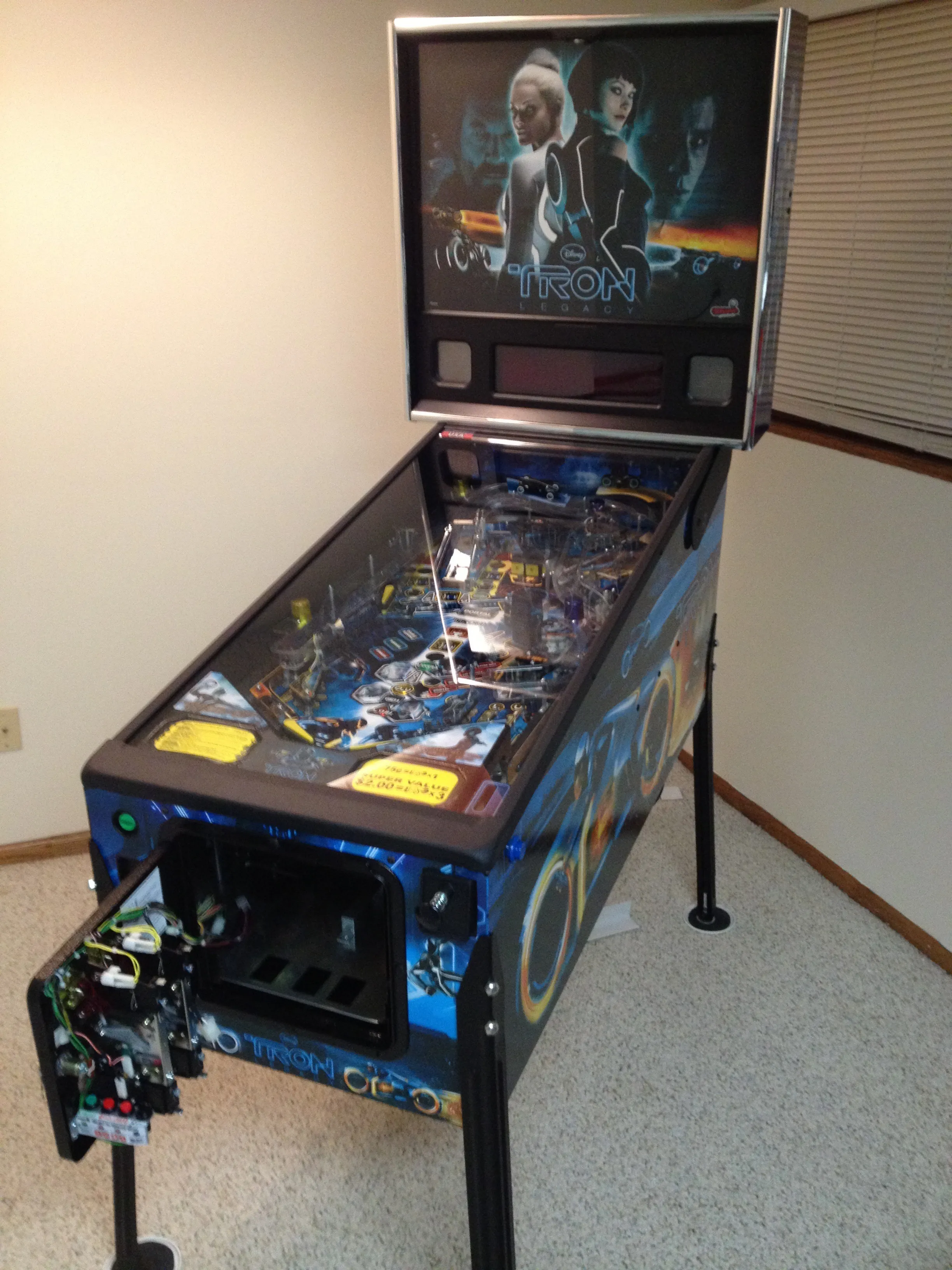
Unboxing my first new machine was genuinely exciting, and it still feels like just yesterday that I was setting it up down in the old basement. My dad came over and took a few pictures of me while we put it together. I dropped a shaker motor into it, and it is just such a fun game. The music alone keeps me coming back.
One quirk of mine being a Pro: at the time, Stern only split this title into a Pro and a Limited Edition, and the gap between them was not huge. The biggest thing the fancier version had was a glowing wire running along the edges of the ramps that changes color to show what mode you are in. It makes the whole table look like the actual Tron grid, and the Pro just does not have it.
Luckily, a guy named Eli made a mod for exactly this. You cannot get it anymore, sadly, but it is brilliant. It came with a thick, fiber-optic-style wire, two little units that pump color into it, and a piece of middleware hardware that sits between the game’s CPU and its light system, reading the signals and telling the wire which light show to run. The result looks almost identical to the high-end version. About the only thing mine still lacks by comparison is the physical lettered TRON targets; mine are just flat ones instead.
Installing it was nerve-racking. I had to carefully pull the ramps off my brand-new machine, drill a series of tiny holes at exact spots around them, and then route the fiber-optic wire and fasten it down with clear zip ties. Drilling into the fresh plastic ramps of a game I had just bought made me sweat, but it turned out phenomenal. It looks fantastic.
It was designed by John Borg, who, fun coincidence, also designed my Data East Star Wars. The one thing I have never managed on it is the final wizard mode, “Portal.” Just to get there you have to complete every mode, and then during Portal you essentially have to complete them all over again, in a single ball. It is nearly impossible, and I still have not finished it. Something to keep chasing.