New pinball: Funhouse
A 1990 Williams Funhouse, acquired June 2012, my first machine in a house I actually bought space for.
Funhouse (Williams, 1990) showed up right around the time I bought my first house. I think it landed within the first two or three months of being a homeowner. The big difference this time: I had specifically bought a place with basement space set aside for pinball. No more laundry room. I was ready for more machines, and this was one of the first to fill the new room.
This one came to me through my friend Troy at Top Score Gamerooms. He had taken the machine in but did not have time to restore it, and he knew I had been hunting for a project for a while, so it landed at exactly the right moment. Fresh off bringing my Star Wars back to life, I was completely on board and ready for the next one.
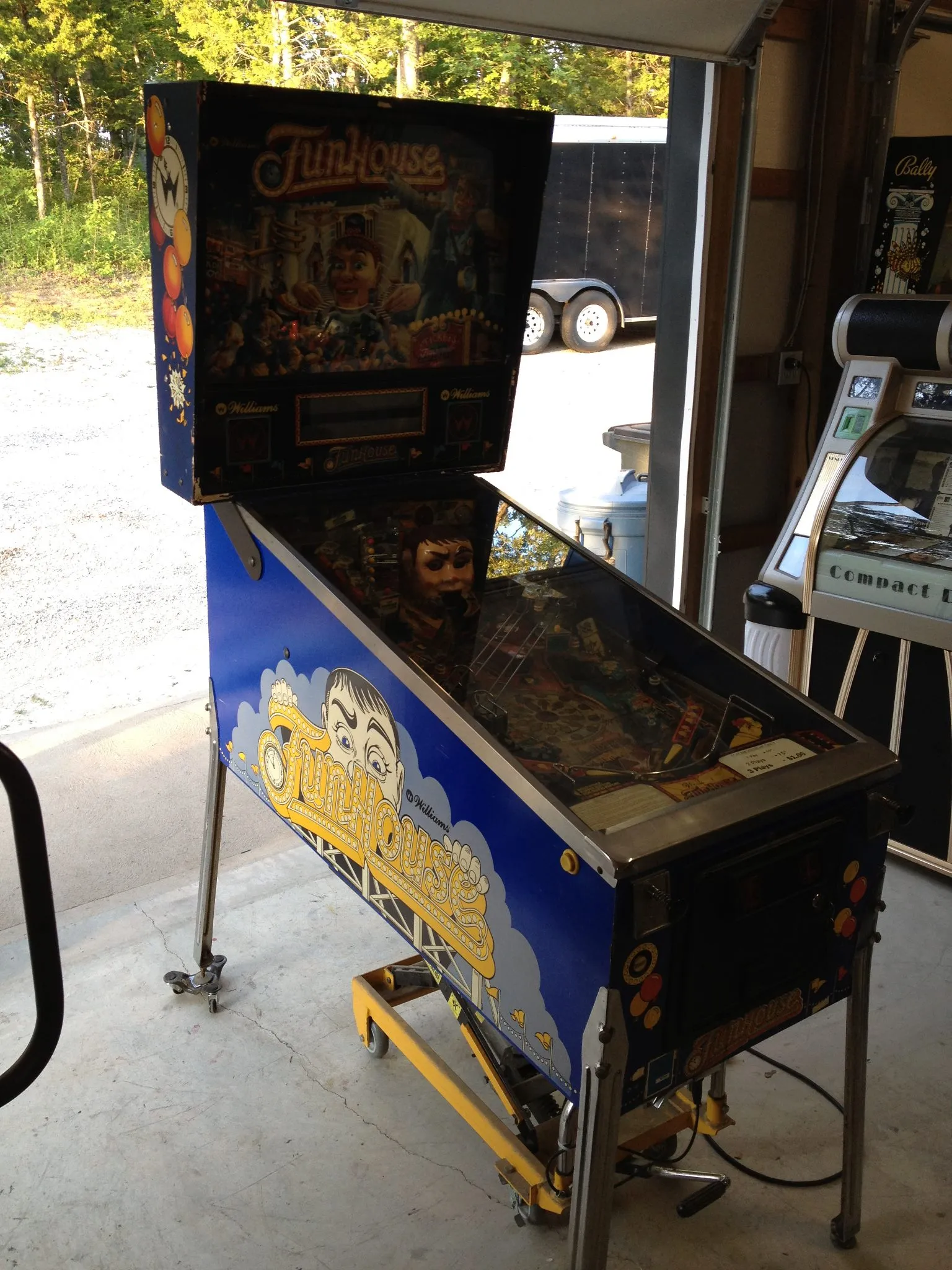
I rebuilt this one from the top down, completely. I was told it had come out of an old Chuck E. Cheese, and it showed. Someone had scrawled “ON” on the side in marker, with an arrow pointing down to where the power switch was. The playfield was rough, worn almost down to bare wood in a few spots. That is a known Funhouse thing, actually: the regular production run did not get a clear coat, so these playfields take a beating over the years, and a hard-used arcade machine like this one took more than most.
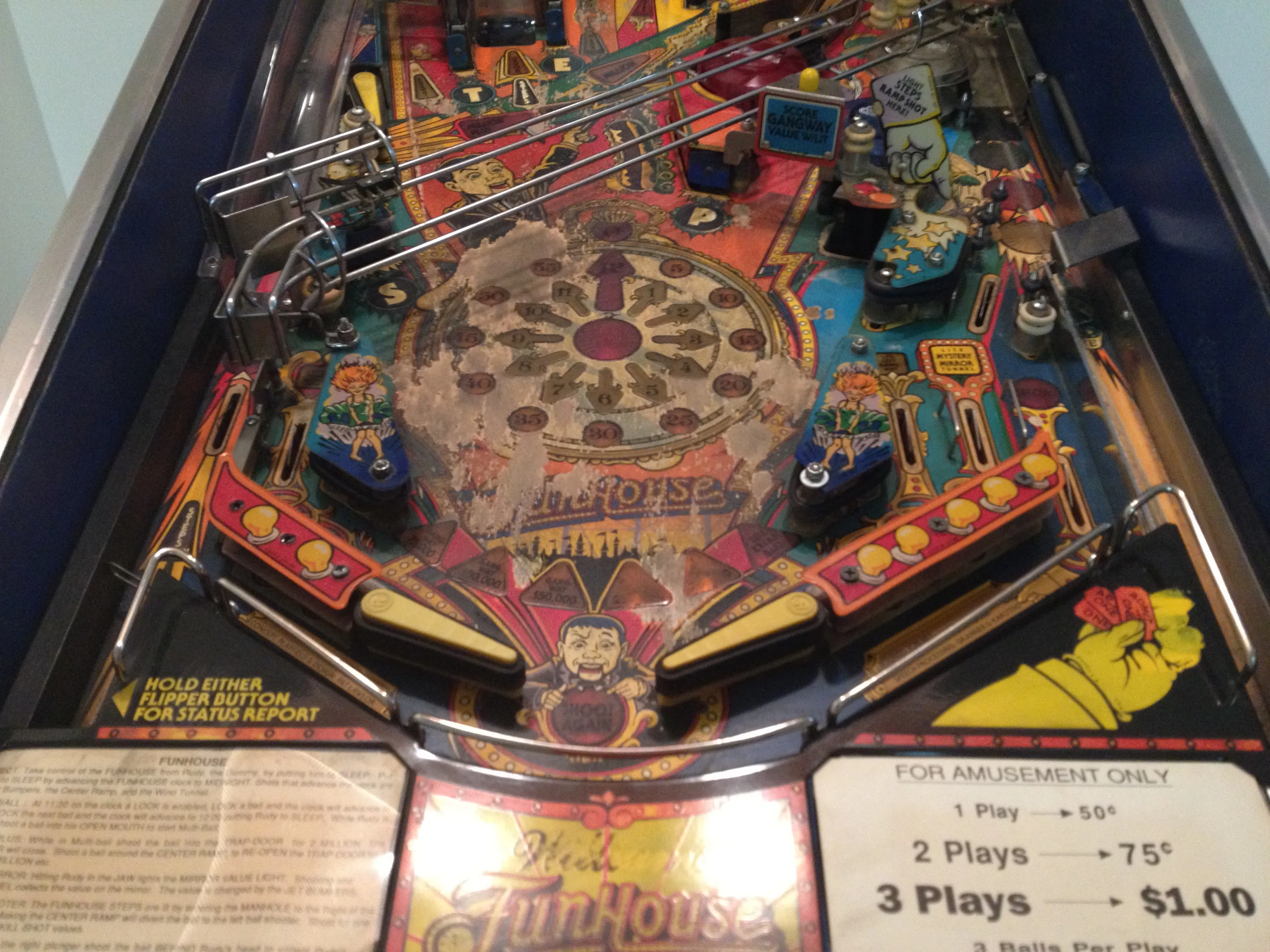
You can see how bad it was. Some of the inserts were lifting up out of the wood, and the surface had worn so unevenly that, while the game was still mildly playable, it made the funniest sound. The silver ball rolling across that no-longer-flat playfield sounded exactly like a car running over a bumpy road.
The rebuild
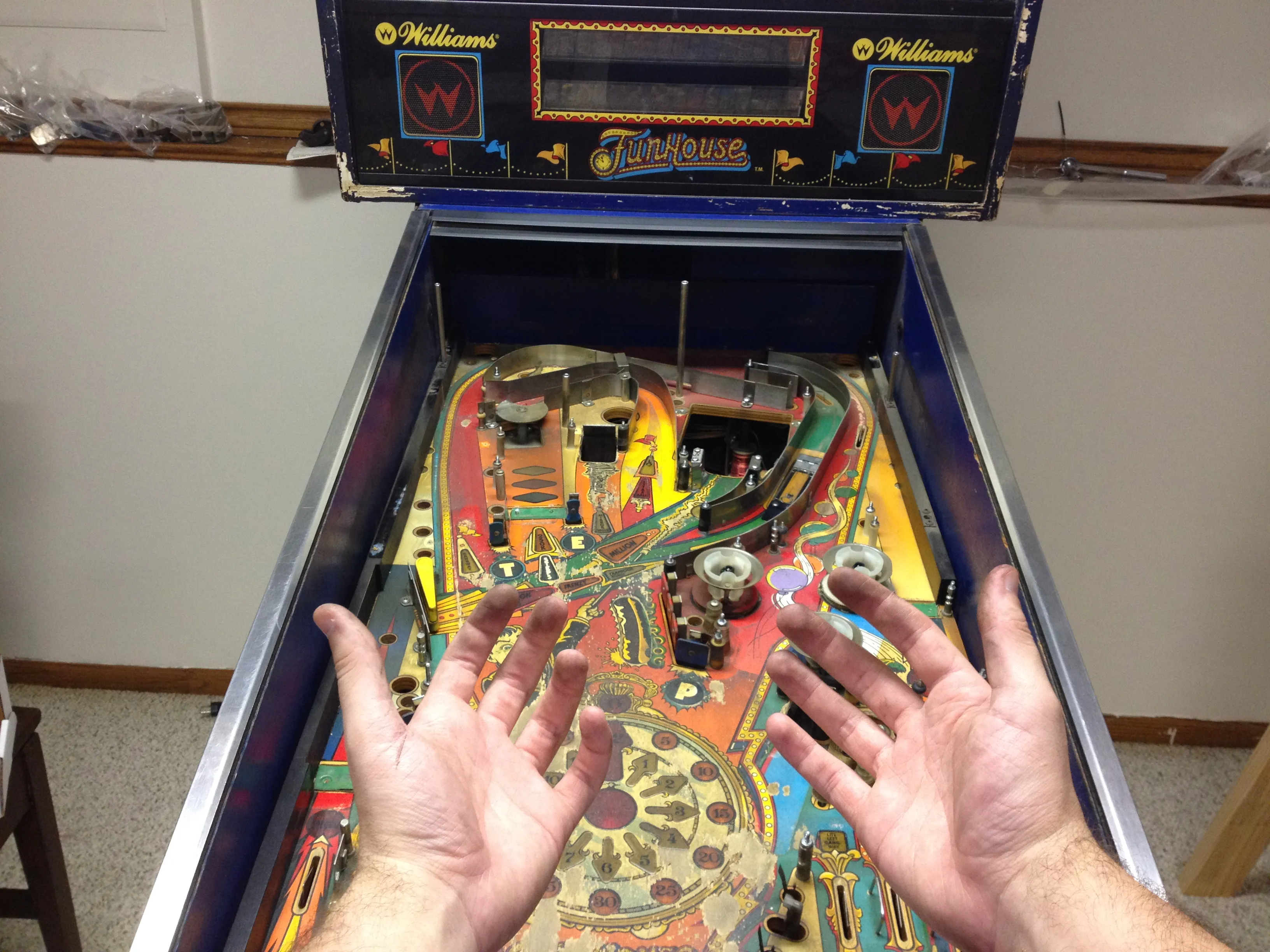
The first big job was stripping the playfield, pulling every part off the top and the bottom. I photographed every single step so I could be sure I put it all back the right way. It was filthy work, my hands were more or less permanently black through this part, which is what this slightly silly photo I took for friends is documenting.
For the playfield itself I got a brand-new, undrilled replacement from Germany. An undrilled board is exactly what it sounds like, a blank, so every single screw hole has to be placed by hand. I laid the old playfield over big sheets of paper and made a template, carefully annotating which holes pass all the way through and which ones do not. The through-holes get pre-dimpled first, so a screw cannot split or damage the wood finish. Some go all the way through, some stop short.
After more than 500 drilling points, I made exactly one mistake. Thankfully it landed somewhere barely visible, and almost never in the ball’s path, so I will take it.
The cabinet was its own project. I bought new side decals, which meant I first had to sand down all the sides of the cabinet and level them out, prepping the wood for a fresh coat of paint and a clean surface for the big new stickers. That part was honestly a little intimidating. In this shot I am about halfway through the sanding, with the machine’s head sitting nearby, still wearing its old, faded art, waiting its turn to be transformed.
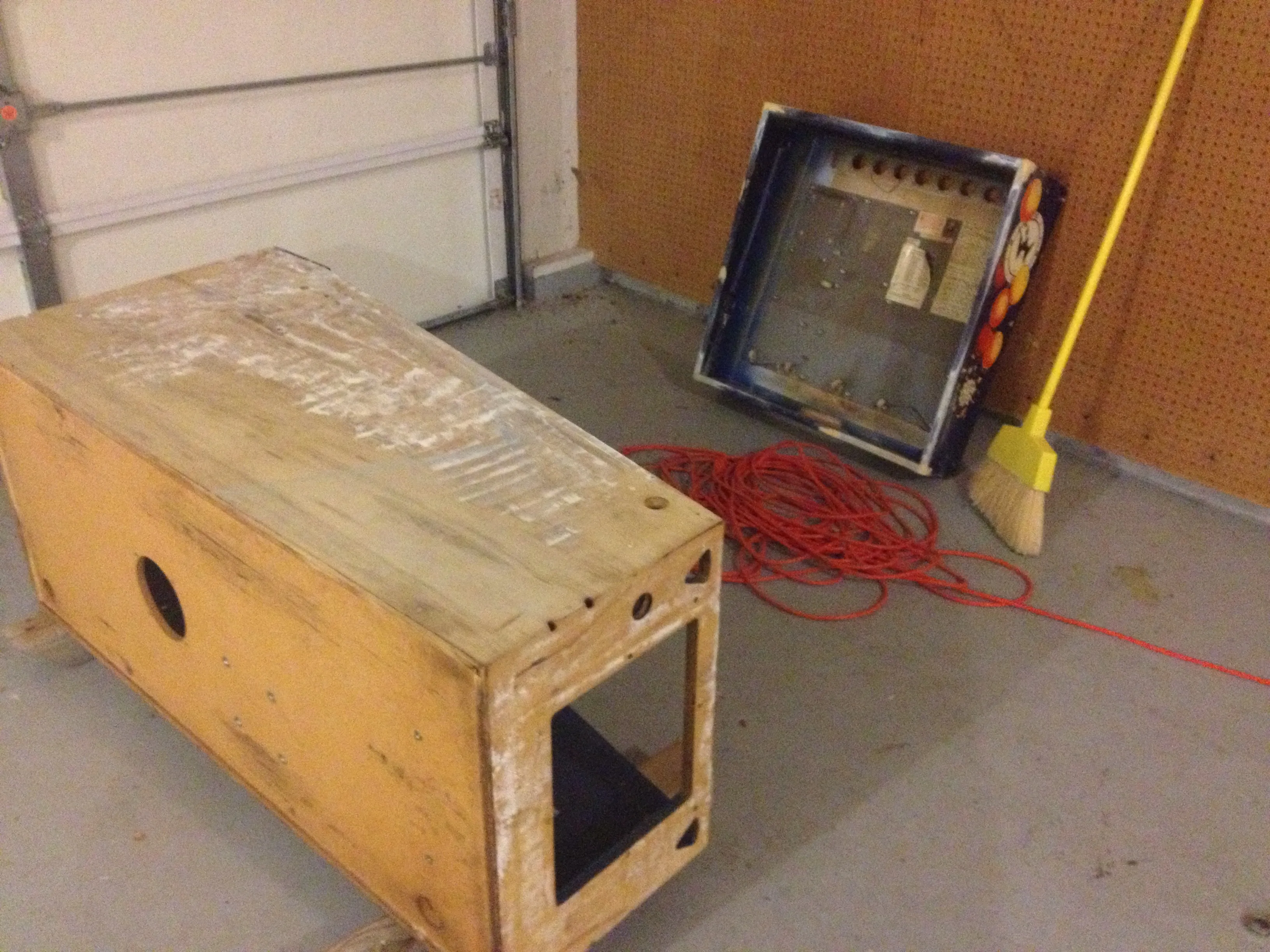
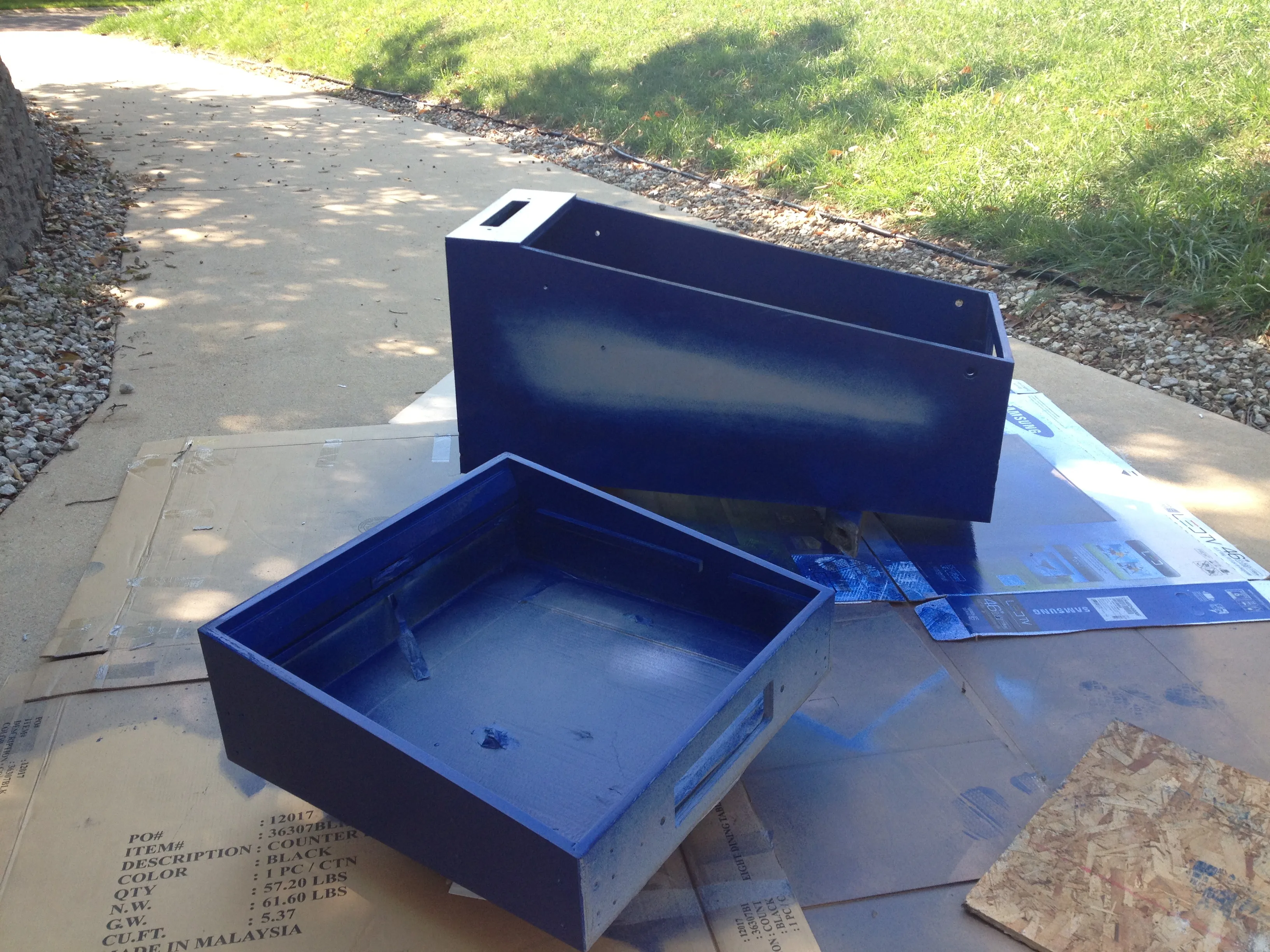
With the sanding done, I had the blue color matched at Lowe’s, picked up one of those cheap paint sprayers, and went to work. The sprayer did a fantastic job, and then promptly died on me. I used it this one time and it never worked again after that, but I would call it worth the money. Here is the cabinet and the head outside the garage, drying in the sun before I brought everything back in. I deliberately left a few spots on the sides bare, partly so overspray would not mess with how level the surface was, and partly because those areas were going to live behind a giant sticker anyway. At this point it was genuinely amazing to watch what was happening to the outside of this machine.
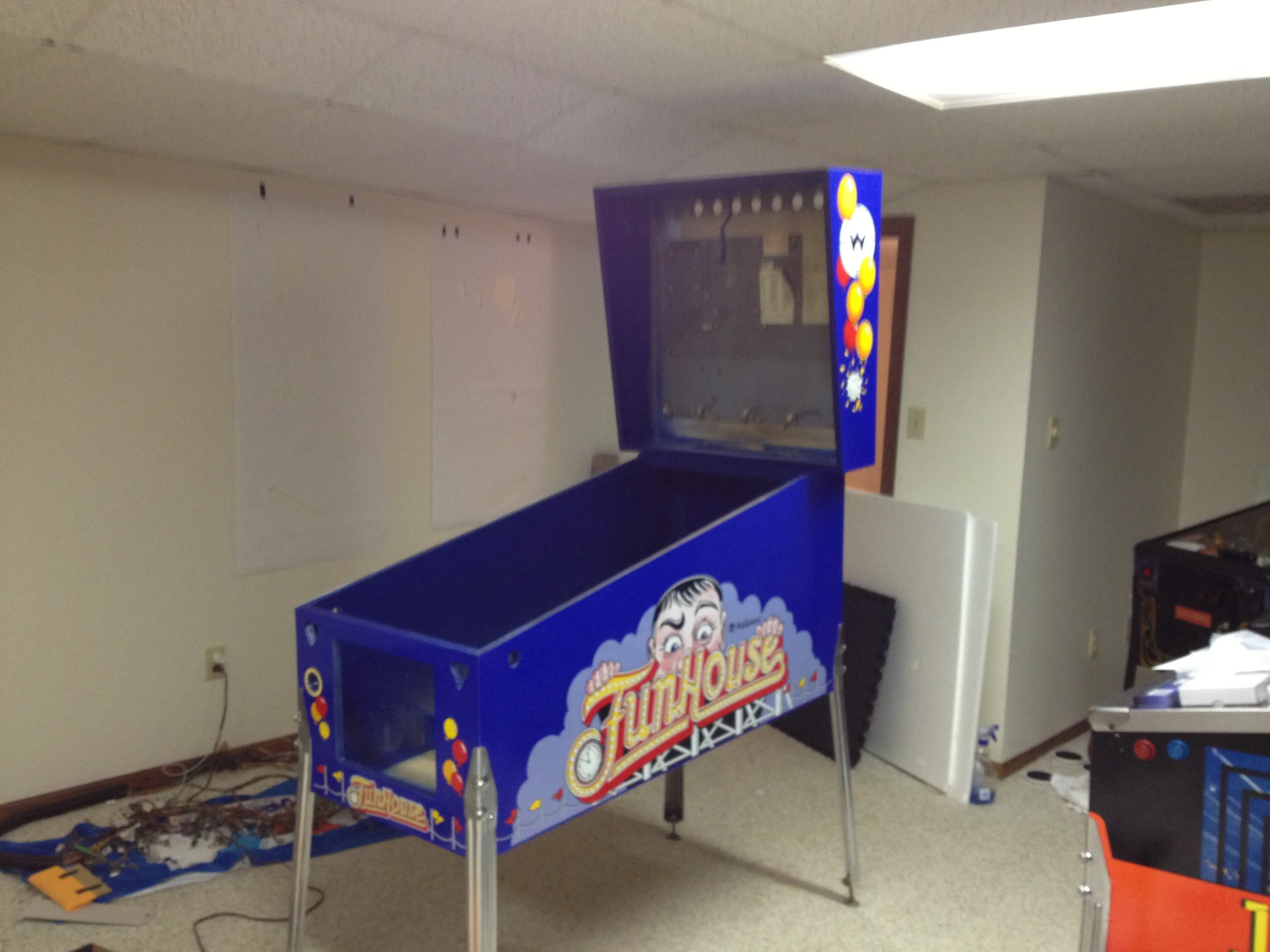
With the cabinet painted, it was time for the big new side decals, and this was the scariest part of the whole job. These stickers are almost as tall as I am, and there is no real second chance with them. I was terrified of trapping a bubble or lining one up crooked, either of which would have been an expensive mistake. I had never done anything like it before, but it turned out fantastic. Standing back and looking at it, it genuinely felt like a brand new Funhouse was being assembled in my basement.
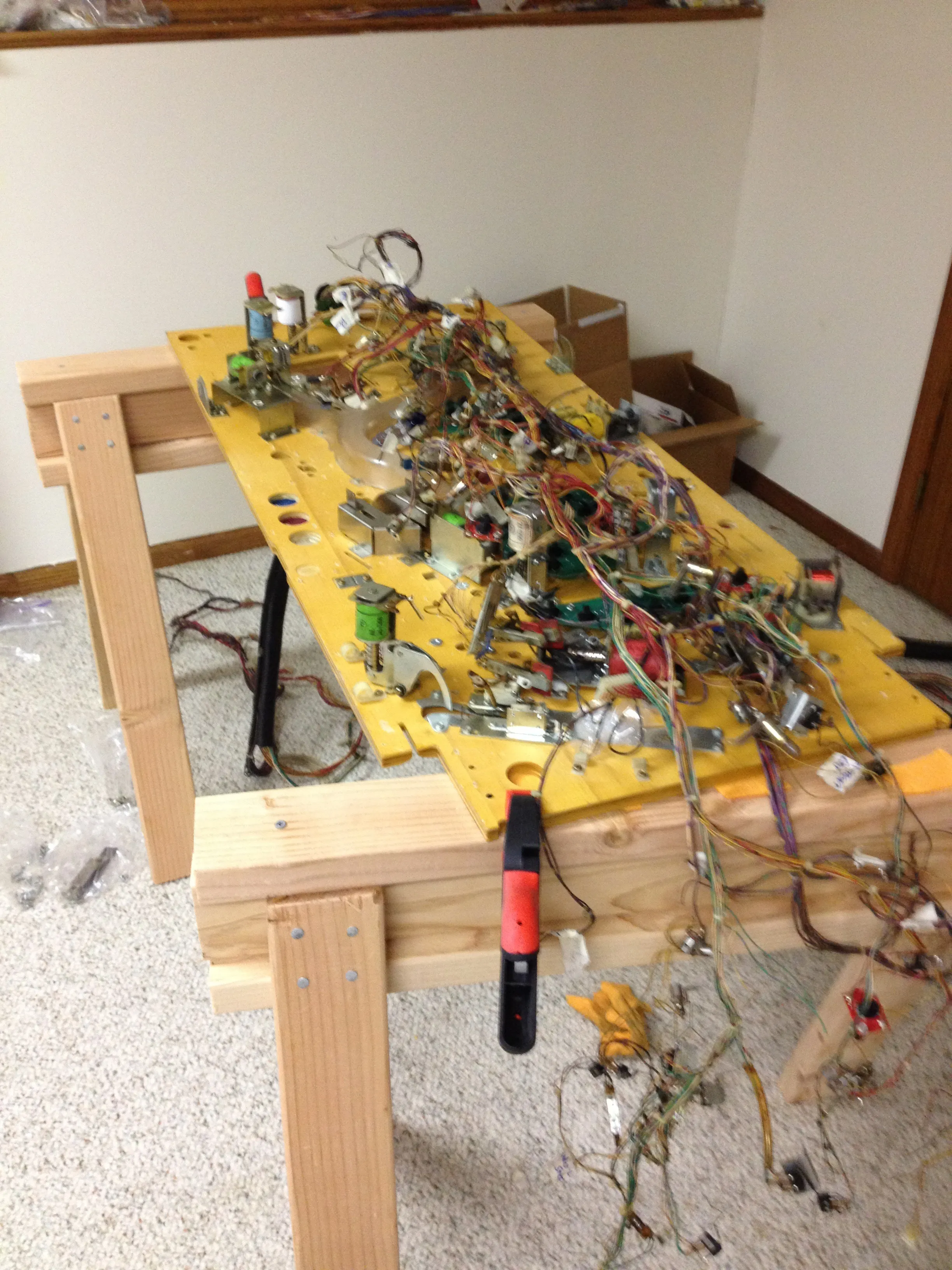
Meanwhile, on a set of sawhorses I built for the job, I started bringing the old wiring harness back onto the brand-new playfield. This is where all those documentation photos earned their keep. I worked through it slowly, cleaning and repairing things as I went, and I picked up new plastics and fresh rubbers along the way to really make the whole game look new.
It was worth every bit of the work. Here is how it turned out:
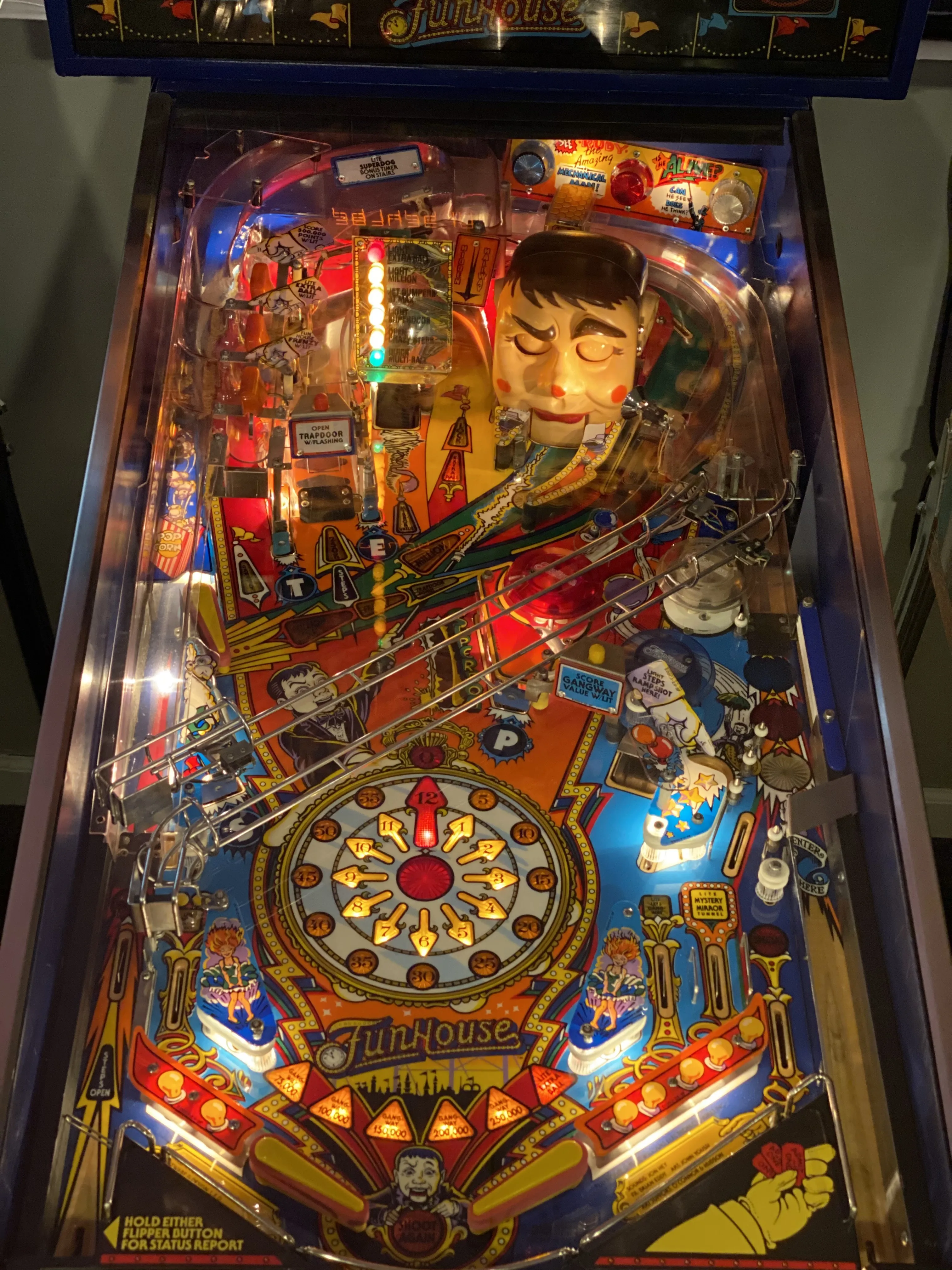
It basically looks brand new, and it plays so well. Funhouse is a Pat Lawlor classic, one of the greats, and Rudy, the animatronic talking head who watches the ball and dares you to shoot one into his mouth, never gets old. (A fun fact I love: Rudy’s voice is Ed Boon, who went on to help create Mortal Kombat.)
I have completely fallen in love with this machine. Every so often I think about trading it for something new, and then I play one single game and immediately think, no, I could never trade this. It is too beautiful, and it is too much fun.
It also taught me an enormous amount: art, soldering, fixing boards, cleaning, documenting, repairing, and the list goes on. At this point I have touched every single part of this machine, and that is exactly what makes it uniquely mine.
Funhouse is a big part of why, years later, I went looking for a Road Show, another Williams classic cut from the same cloth. I always wanted one, and eventually I got it.